
Since e-discovery law first began in the nineteen-nineties the problem of spoliation and sanctions has primarily been that of large corporations. In the classic David and Goliath scenario, typical for instance in employment litigation, the little David plaintiffs had a powerful slingshot to win cases: spoliation and sanctions. The large corporate defendants had zillions of bits of ESI, the little guy David requesting data had little or no bits. This imbalance of burden allowed the clever plaintiff’s counsel to win a case, not on the merits of their client’s complaint, but on the failures of the defendant corporation, the failures to lock down and secure all potentially relevant ESI from destruction. If the little guy could prove intentional destruction by one of the key players for the corporate defendant, then it was game over for the defendant. The famous Zubulake saga by Judge Scheindlin is an employment law case that proved the point. After Zubulake very few defendants would even risk going to trial, like UBS Warburg did in Zubulake. Instead, all too often, they just paid too much to settle the case.
Electronic discovery became the great equalizer in the seemingly never-ending battle between the plaintiffs Bar and the defense Bar. Even if a plaintiff could not prove spoliation, there was always an ESI cloud hanging over defense counsel’s head. Did their client preserve everything they needed to? How much was enough? How were they going to respond to plaintiff’s request to produce. After while, by around 2010, things got so bad that just the threat of a production request was enough to force inflated settlements in some cases. Clever plaintiff’s counsel did not even have to get into spoliation or sanctions motion practice, all they had to do was get an order compelling production. The costs to search and produce might very well exceed the cost to settle the case. Yes, little David was smiling. All he had to do was take his e-discovery slingshot out of his pocket and the allegedly big bad Goliath might run away.
Continuing Legal Education
Many e-discovery specialists, especially those of us who knew the Goliaths, and knew they were not as bad as the propaganda would suggest, were upset by all the cases we saw settling without regard to merits. Many defense counsel, as I was until 2006, really hated to see claims paid that they knew were bogus. It just did not seem right, even though it made economic sense to insurance adjusters. That was part of the reason that in 2006 I gave up my regular, admittedly defense oriented practice (although I always did some plaintiff’s work too when possible), and only worked on electronic discovery. Like many other tech-oriented attorneys I was focused on trying to level the playing field. I wanted fair trials to come back. I wanted Goliath to clean up his act so that would be possible. I wanted to teach Goliath how to preserve, search, and produce in a fair and proportional manner so that he would not have to shy away from David’s e-discovery slingshot.
Yes. I wanted Goliath to reform, to stop all destruction of ESI, to preserve in a prudent manner. So did many others attorneys moving into the e-discovery field from both sides. We all wanted cases to be decided on the merits. We all wanted important evidence to be preserved, not destroyed, either intentionally or by negligence. The answer then and now seemed to be a combination of education and technology. Most attorneys who had developed knowledge and skills gave of their time to present CLEs that would help other attorneys to preserve and protect, to search and serve . CLEs were a good way to network and improve everyone’s skills.
 These education efforts have been going on for decades now. I estimate that tens of thousands of e-discovery CLE have been presented by now, most by a relatively small cadre of dedicated judges, lawyers and techs. This effort has now even become a second-generation effort, with my son, Adam Losey, and his non-profit foundation, IT-Lex, putting on its first CLE in Florida on October 17 and 18, 2013. It’s called Innovate, and will have many of the top speakers and educators in a state-of-the-art event. (I suggest you sign up soon, like the Sedona Conference, attendance at Innovate will be capped.)
Why Goliath Is Smiling?
 After all of these years of e-discovery anguish, Goliath is finally starting to smile. There are two reasons. First, all of this hard work at education and training of the holders of too-much-information is starting to pay off. Goliath is learning how to save evidence. The many thousands of CLEs on e-discovery given over the past fifteen years are starting to bear fruit. Even though corporations have more data than ever before, and more kinds of ESI, they are getting their act together. More and more of them have dedicated internal e-discovery teams, a move I have been pushing in this e-discovery team blog since 2006. Just as important, large organizations have now learned, many of them the hard way, but they learned, that they need to hire lawyers who are competent in e-discovery. They have learned that competence in litigation alone is not adequate. A new class of e-discovery lawyers has emerged, and they are serving their clients well.
The second reason Goliath is smiling is that little David is not so little any more. Frankly, he has become quite pudgy, bloated with ESI. Yes, even the little guys today have more ESI with potential evidence than they know what to do with, much less know how to preserve, search and produce. Also, it turns out that David is not always the honest boy scout we had been led to believe. The little guys are now often the ones out there spoliating away, thinking that they can get away with it, just like Laura Zubulake’s supervisor a decade ago. It is all just people after all, and some people are not that honest. If they are not stopped by assertive counsel, they will try to hide the bad stuff.
The plaintiffs bar is now starting to finds itself in the same position the defense bar was in a few years ago. From my front line position in the employment law practice, where small versus big is the norm, I think the tide has now turned. It is the plaintiffs now who cannot seem to save, find, or produce their ESI. It is the plaintiff’s now who are losing cases, in spite of the merits, based on their intentional or negligent destruction of evidence. It is the plaintiffs who are getting bad or no advice from their attorneys about preservation. It is the plaintiffs who must now settle because they could not or cannot find and produce all of the evidence responsive to defendants requests, all of the Facebook posts, tweets, texts, and email. The tide has turned.
 I offer two recent examples of this, one from my home court in Orlando Florida, and another from Alabama. In the Orlando case a former employee was caught throwing her computer into the river. Simon Property Group, Inc. v. Lauria, 2012 U.S. Dist. LEXIS 184638 (M.D. Fla. 2012). Good defense counsel tactics uncovered this fraud, a fraud that, in my opinion, could have been prevented by better advice to plaintiff from her legal counsel. For details on this case, look at the other blog I edit and write under my law firm’s banner, eDiscoveryLawToday. The article is titled Fishing Expedition Discovers Laptop Cast into Indian River.
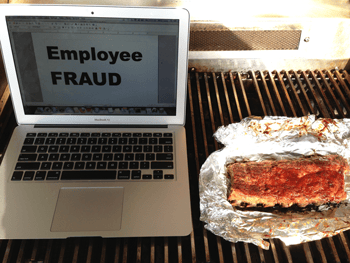 In the other case out of Alabama the employee claiming reverse discrimination decided to get rid of her computer after it looked like a forensic examination would be ordered. Evans v. Mobile Cnty. Health Dep’t, 2012 U.S. Dist. LEXIS 8530 (S.D. Ala. 2012). Rather than throw it in the river, the plaintiff here burned her computer in her backyard. Once again, in my opinion plaintiff’s counsel was asleep at the wheel, or worse. I wrote an article on this one too: Plaintiff’s Backyard Summer BBQ of Her Computer Leads to Sanctions. The truth is always stranger than fiction. Read the articles and cases for yourself to see what is going on in litigation today. The tide is changing. E-discovery is starting to be some defense counsel’s best friend.
Boomerang Effect
 Electronic discovery specialist have explained for years now to attorneys who attend e-discovery CLEs what I call the boomerang effect. That you cannot take action to enforce e-discovery, to compel and to sanction, unless your own house is in order. You may throw the sanctions boomerang at the plaintiff only to have it come back at you. Just ask Apple in the Samsung patent case last years where both sides ended up with spoliation sanctions and countervailing adverse inferences. Apple v. Samsung, U.S.D.C., N.D. Ca., Case No.: 11-CV-01846-LHK, Document 1894, Filed 08/21/12.
Awareness of the boomerang effect is one way we motivated and cajoled attorneys to get their clients to take preservation of ESI more seriously. If you do not want the other side to get away with breaking the rules, than you need to be very sure you are following the rules yourself. In the case of large organizations this mean spending money on people, e-discovery teams, and technology.
The good new is this instruction has finally worked. It has taken over a decade, but the attendees of these many CLEs, including thousands of in-house counsel, have heard and have taken action. Many corporations have now made substantial investments. Even though their ESI is still growing at an exponential rate, and is still disproportional to David’s, they have their act together. Their e-discovery teams can save, find and produce, thanks to the new technologies of the vendors, and the new skills of many lawyers.
Where Are All The Plaintiffs Counsel?
 I have always been willing to teach David’s attorneys too, and so have others from both sides of the bar, but most plaintiffs counsel have not cared about e-discovery. In my view the plaintiffs’ bar has not been trying as hard as the defense bar. Now, as a whole, they have fallen way behind.
Plaintiff’s counsel have always been a no-show at e-discovery education events, despite the fact that several of the country’s top experts are openly plaintiff. You have only to think of Bill Butterfield or Ariana J. Tadler. I admit that I was once openly defense, but have tried to go neutral since 2006. Unlike some others in the field who have gone neutral, or attempted to do so, I am aware that I may still be somewhat biased. (Maybe even more than somewhat, but at least I am working on it.) With this perhaps tempering bias in mind, I cannot help but think that the plaintiffs Bar has created this problem, where the pendulum has now begun to swing against them. They have done so by their own laziness and lack of foresight.
Harsh words I know, and of course there are many exceptions (for instance a large plaintiffs firm in my locale, Morgan & Morgan, insisted that one of their new hires take my course at the University of Florida), but how else do you explain that at every single CLE event I have ever attended since 2006, over 90% of the attendees have been defense oriented. The truth is, when I ask the question at CLEs: how many of you primarily do plaintiffs work; usually only one of two hands go up, sometimes none.
I have talked to other CLE presenters and sponsors about this. They see the same thing. The consensus is that plaintiffs counsel rarely attend e-discovery educational CLEs, even when they are free. Of course, as mentioned, there are exceptions to this general rule; some plaintiff firms understand very well the importance of e-discovery and continued legal education. They are privately chagrined that their colleagues do not seem to be listening to them. The truth is, the vast majority of plaintiffs counsel just do not get it.
Not yet anyway. After they start losing cases because of sanctions, like corporate Goliaths did just a few years ago, the rest of the plaintiff bar will wake up. More personal sanctions of plaintiffs counsel will also help them to wake up. Then they will start insisting that their individual clients do the right thing, that small plaintiffs preserve all of the evidence, not just the ESI that supports their position. I predict that even after a series of cases like this, and even after the plaintiffs bar changes its attitude and starts to take e-discovery education seriously, that it will take some time to improve the skills of that many lawyers. (There are more plaintiffs lawyers than defense lawyers, including the solos and part-timers.) In the meantime, defense counsel may finally have the edge for a while. So too will the few plaintiff’s counsel that already get it. But is this a good thing? Does it serve justice?
Conclusion
 The sudden emergence of the common Man as a holder of too-much-information has caught most plaintiffs attorneys by surprise. They are unprepared and vulnerable to defense counsel boomerangs. Some defense counsel may celebrate and gloat about this turn around, but I do not. I am concerned about the big picture. I see danger in this imbalance of legal skills. I see danger to the rights of our citizens to obtain equal justice under the law. I also see danger in allowing destruction of evidence by any party to go unchecked. There is no easy answer.
Sanctions for spoliation is no longer a weapon available only to a few sophisticated counsel in the plaintiffs bar. It is now also available to many, if not most large corporations and their attorneys. There are a growing number of highly trained defense attorneys who are no longer afraid of the boomerang effect. They are free to fight the fraudulent or negligent withholding of evidence on the part of those who sue them. Many large organizations today have their house in order and are preserving all of the evidence that proportionality demands. This is good news for those concerned about e-discovery extortion and settlements forced upon defendants. I certainly celebrate this. It is a goal I have long worked towards. But are we now in danger of excess in the other direction due to the general lack of skills by the plaintiffs bar?
Cases should be decided on the merits, on the evidence. I do not want plaintiffs to have to settle for too cheap, or lose their meritorious case, just because their attorneys did not know e-discovery, did not know they should make sure their clients preserve evidence, did not know how to make a production. It is not good for our system of justice when this happens to any party, defendants or plaintiffs. That is part of the big picture. But the other part is that the truth must always prevail. Plaintiffs must not be allowed to destroy evidence any more than defendants. If evidence is destroyed by anyone, it is much harder to know the truth. If evidence is destroyed or altered, then the responsible party should be sanctioned. So too should their attorneys, if they are to blame. There is no one-free-bite for spoliation, be they defendant or plaintiff.
 Sanctions should be imposed regardless of whether it is the plaintiff or defendant who is guilty. Sanctions of erring parties, and their attorneys, can have a strong deterrent effect. It can motivate all litigants and their attorneys to take the time and effort needed to marshal and preserve evidence. It can also motivate attorneys to attend CLEs and really learn and practice these new skills. Preservation of evidence is a serious matter for both sides of the “v.” Punishment by sanctions is a strong deterrent of both intentional bad faith actions, and negligent actions. In either event, the truth has been lost, justice has been tainted.
Fear of sanctions is an important motivator. That is one reason I suggest the bar be very careful about any amendment to the rules that weakens a judge’s discretion to sanction a party for deletion or alteration of evidence. The defense bar especially should be careful about what it asks for in the way of rules reform. They should think twice about pushing new rules that make it harder for judges to punish litigants for wrongful conduct, especially in the area of ESI preservation. They may end up hoisted by their own petard.
The Simon Property Group and Evans cases were easy facts, but many other cases of plaintiff spoliation are not. It was clear the plaintiffs in these cases did the deeds themselves and did them in bad faith. The harsh sanctions were appropriate. The court’s discretion in this area was properly exercised.
I continue to believe that this judicial discretion to punish where appropriate, either the litigant, or their attorney, or both, should be preserved and strengthened, not hindered. I continue to prefer legal education and technology as a solution to the preservation problem, not a weakened judiciary. We have a delicate balance here, one that requires wisdom and good judgment by our judiciary. Too many new rules may upset the balance we now have.
Discover more from e-Discovery Team
Subscribe to get the latest posts sent to your email.

I would disagree with your statements (specifically in my case- Zubulake): “If the little guy could prove intentional destruction by one of the key players for the corporate defendant, then it was game over for the defendant. The famous Zubulake saga by Judge Scheindlin is an employment law case that proved the point.”
In my book I write about the jury’s reaction to the adverse inference instruction in my case– apparently it played no role in their decision. What did matter was the evidence submitted to them— not missing evidence about which they could (if they wanted) infer something.
So my case did not prove the point. Other cases might provide better examples.
Laura Zubulake
Hi Laura. Hope all is well.
What many commentators miss is the leverage created by the skillful employment of a motions practice. The Zubulake case is perhaps a bad example because, at that time, national attorney awareness of the risks was low. (I remember many of my colleagues stating, “I don’t care what some New York Judge says!) Those motions for sanctions had not close the effect on counsel’s behavior that they would have today.
So, with only less than 5% of federal cases going to trial (I am sure someone will correct me but it is not off by more than a point or two), the power of an eDiscovery motions practice is in the leverage it can create prior to trial. I have witnessed it on many occasions.
Has anyone ever been able to create a method to guarantee electronic evidence will be accepted in court. FRE902(11) Self authentication? Is there interest in it?
Until FRCP compliance is enforced just like any other law there will be exist a population (a large one, per your blog) who can and will ‘opt out’ – to the detriment of the courts and (usually) their clients. (Just ask any CFO if they would ever try to ‘opt out’ of even minor SarBox provisions).
Put perjury-like penalties on insincere 26(g) certifications and impound some attorney’s vacation home for thumbing his nose at initial disclosure, and you’ll start to see some real progress on ending the behaviors about which you opine. Until then, well, it’s everyone’s opinion that governs everyone’s behavior, and your opinion (unfortunately) is JUST yours.